
Content verified by

What are pacemakers and ICDs?
Pacemakers and implantable cardioverter defibrillators (ICDs) are different types of implanted electronic devices that treat slow, abnormal and dangerous heart rhythms and help your heart function.
Pacemakers and ICDs are small battery-powered devices. They are normally sited beneath the superficial fat layer just below the collarbone. They are connected to the heart through fine leads, which work to monitor the heart’s electrical activity and transmit electrical impulses to regulate the heartbeat.
Our cardiology service at Royal Brompton and Harefield hospitals are world-leading experts in implanting pacemakers and ICDs. Both our hospitals are recognised among the world’s best centres for heart care.
Experts in pacemakers and ICDs
Our world-leading cardiologists offer:
- minimally invasive implantation of pacemakers and ICDs
- short-notice appointments, available in as little as 24 hours
- fast access to treatment

What controls the heartbeat?
Your heart has an electrical system that controls the heartbeat. The heart’s rhythm and rate are regulated by the sinus node, which functions as the heart’s natural pacemaker. In a healthy heart, the node sends regular electrical impulses to the cardiac muscles, making them contract and pump blood.
If the sinus node is faulty, or if there is a problem with the conducting tissue between the top and bottom chambers of the heart, then the heart may beat abnormally slowly. In these circumstances a pacemaker implantation is required to prevent the heart from going too slowly, which may cause dizzy spells or excessive fatigue.
In cases where the heart muscle has become damaged due to heart attacks or diseases of the heart muscle (cardiomyopathy), it’s possible for the heart to go into a dangerously fast heart rhythm. In these circumstances, your cardiologist may recommend that you have an ICD implanted.
What is a pacemaker?
A pacemaker is an electronic device implanted in your body to treat slow or abnormal heart rhythms and support your cardiac function.
You may need a pacemaker if you have a slow or irregular heartbeat. A pacemaker can work on-demand or all the time to regulate your heart rate and help your heart work effectively.
Special types of pacemakers, called biventricular pacemakers or cardiac resynchronisation therapy (CRT), can be used to regulate and sync the pumping chambers of your heart. A cardiac resynchronisation therapy with a defibrillator (CRT-D) combines the functions of a pacemaker with an ICD. These devices help improve heart function and treat heart failure by coordinating the way the heart chambers contract, ensuring ventricles beat in sync.
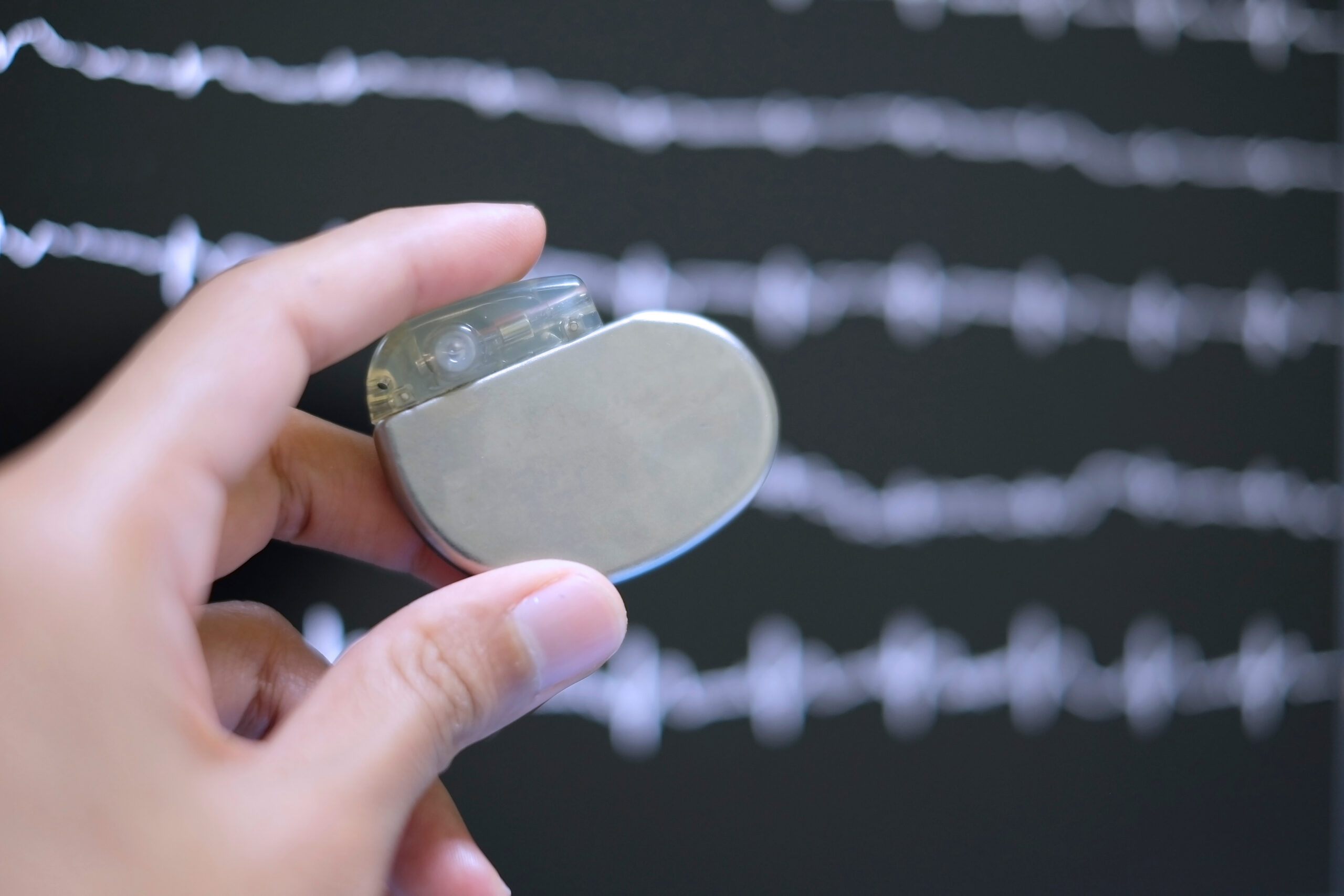
You may need a pacemaker if you have a slow or irregular heartbeat.
What is an ICD?
ICD stands for implantable cardioverter-defibrillator. ICDs are small electronic devices that can be implanted in your body. An ICD transmits electrical pulses which regulate abnormal and dangerous heart rhythms.
You may need an ICD if your heart has gone into an abnormally fast heart rhythm disturbance, or if your heart has been damaged by previous heart attacks or heart muscle disease (cardiomyopathy). An ICD may also be advised if you are at risk of dangerous heart rhythms that could cause sudden death.
Subcutaneous implantable cardioverter-defibrillators (S-ICDs) help prevent dangerous heart rhythms like traditional ICDs but are placed under the skin rather than inside blood vessels. This makes the procedure less invasive and simplifies lead replacement, which is especially beneficial for younger patients. S-ICDs are also a good option for those with difficult blood vessel access. However, they do not provide pacing for slow heart rhythms, so they are not suitable for patients who need this function.
What does a pacemaker do?
A pacemaker takes over the work of a faulty sinus node. It consists of a small box containing a battery and an electric circuit, and electrode leads. The battery sends regular electrical impulses through the leads to your heart muscles. Each impulse makes the heart muscle contract and produces a heartbeat.
A pacemaker continuously monitors your heart’s electrical activity. It can work constantly (called fixed-rate pacing) or on-demand when your heart beats too slowly or skips beats. Some devices can also work to increase your heart rate when you’re exercising to meet your body’s increased needs.
A biventricular pacemaker is a special kind of device that helps synchronise the heart chambers’ contraction, improving the pumping action and treating heart failure.
What does an ICD do?
An ICD works to control and regulate your heartbeat. It consists of a small box containing a battery-powered electric circuit and electrode leads that connect it to your heart.
An ICD continuously monitors your heart’s rate and rhythm. If it detects a dangerous arrhythmia, it can act in 3 ways to restore a normal rhythm:
Pacing
An ICD can act as a pacemaker, taking over the function of the heart’s natural pacemaker or conducting tissue. The device can send electrical signals through the leads to the heart muscles. Each impulse makes the heart contract and produces a heartbeat.
Antitachycardia pacing (ATP)
If the ICD detects that the heart has gone into an abnormally fast, life–threatening rhythm disturbance it will pace the bottom chambers of the heart to try to terminate the rhythm disturbance. You may not be aware of this happening. The ICD can transmit small low-energy electric shocks to restore a normal rhythm if it has become irregular.
Defibrillation
In circumstances where the ICD detects that the heart has gone into an abnormally fast rhythm disturbance and that your life is in danger, it will deliver a small electric shock which will terminate the rhythm disturbance. The ICD can administer larger electric shocks to treat dangerous potentially fatal arrhythmias and restore the heart’s normal rhythm.
If you have a heart rhythm problem that can benefit from a pacemaker or ICD, our specialists can help. Get in touch with our team to book an appointment.
How are pacemakers and ICDs fitted?
Pacemakers and ICDs are usually implanted in a minimally invasive procedure in a cardiac catheterisation laboratory or ‘cath lab’. However, if you are having open-heart surgery for another problem, the cardiothoracic surgeon may implant the device simultaneously.
Your specialist will usually administer a local anaesthetic to numb the area and sedation to keep you relaxed throughout the procedure. You may feel some pressure and pulling, but it shouldn’t be painful.
Your cardiologist will make a small incision in the skin under your left collarbone. They will insert fine leads into a blood vessel and guide them into your heart using X-ray guidance. When the leads are in the correct position, the specialist will connect them to the pacemaker or ICD box. They will check that the device is working properly, monitoring the heart’s electrical activity and providing the right stimulation level.
Your specialist will make a space known as a ‘pocket’ under the skin below your collarbone to hold the box, before implanting the device. Finally, they will use stitches or medical glue to close the incision and apply a dressing. ICDs and pacemakers are slim, and around the size of a matchbox, so they are usually well covered by the tissue on the chest wall, although they can be more evident if you are very slim.
Subcutaneous ICDs
Subcutaneous ICDs (S-ICDs) are fitted differently to traditional ICDs as the leads for the device are placed under the skin across the ribs, along the breastbone before reaching the heart. Subcutaneous ICDs are less invasive than traditional devices because they administer a shock from outside of the heart and aren’t fitted within the heart’s muscle walls.
ICDs, S-ICDs and pacemakers can be fitted by your cardiologist as a day case, which means you can recover in the comfort of your own home. However, your cardiology team may keep you in hospital overnight or longer to closely monitor your recovery, if they deem it necessary.
If you would like to speak to one of our world-leading cardiologists about pacemakers or ICDs, contact our team to book an appointment.
Who can benefit from a pacemaker?
You will need a pacemaker if there are problems with your heart’s conduction system or its ability to pump blood effectively. You may notice that your heart rate is slow, experience palpitations, or feel that your heart pauses or skips a beat. Problems with the heart’s rhythm or function cause chest pain, breathlessness and ankle swelling, and may make you feel faint and exhausted. Having a pacemaker fitted could help alleviate these symptoms, improve your quality of life and, in some patients, it can be lifesaving.
You may need a pacemaker if you have:
- Atrial fibrillation: If atrial fibrillation is making your heartbeat too slowly, a pacemaker could rectify this by administering electric pulses. You may require additional treatment i.e. medication
- Bradycardia: An abnormally slow heart rate where your heart beats less than 60 times a minute
- Cardioinhibitory syncope: When a pause in the heartbeat causes spells of fainting or collapse
- Heart block: A delay or interruption to the electrical impulses between the upper and lower heart chambers, which slows the heartbeat
- Heart failure: The heart becomes too weak or stiff, preventing it from pumping around the blood efficiently
- Sick sinus syndrome: An issue with your heart’s natural pacemaker, causing the heart to not function correctly
If you’re concerned about your heart health, complete our patient contact form and we’ll help you decide on the right next step.
What are the risks from a pacemaker?
Like all surgical interventions, there are some risks associated with a pacemaker. You’re at risk of getting an infection at the site where the device is fitted. You could also experience blood clots where the device is placed or damage to blood vessels or nerves. If you take blood thinners, you are also at higher risk of swelling, bruising, or bleeding. Your heart specialist will work with you to minimise these risks and assess whether the benefits of having the device fitted outweigh these risks.
Other risks include your pacemaker malfunctioning. You should have annual check-ups to ensure your pacemaker is functioning properly, and your device battery should last 6–7 years depending on its use and the device that is fitted. You will be given a pacemaker registration card to carry at all times. The card includes your pacemaker’s make and model in case you require emergency treatment.
Strong electromagnetic fields can affect your pacemaker, so you should keep a safe distance from certain electrical equipment, including induction hobs and metal detectors. You should also be mindful when undergoing medical and dental tests (such as MRIs) as these could also interrupt the pacemaker’s function.
Find out more about living with a pacemaker here.
Who can benefit from an ICD?
You might need an ICD if you are at risk of potentially life–threatening heart arrhythmias that could cause sudden death. You may have already had an abnormal heart rhythm, or tests may have confirmed that your heart has been damaged because of previous heart attacks or cardiomyopathy.
ICDs are implanted in patients who have inherited abnormalities of the ion channels within the heart cells, showing that you’re at risk of an arrhythmia in the future because of faulty genes or heart disease.
You may need an ICD if you have:
- Brugada syndrome
- cardiomyopathy
- had the arrhythmias ventricular tachycardia or ventricular fibrillation in the past
- heart failure which could cause a dangerous arrhythmia.
- inherited electrical abnormalities of the heart (often there is a family history of unexplained sudden cardiac death)
- long QT syndrome
- survived a sudden cardiac arrest in the past
Pacemakers and implantable defibrillators in young people
Your child may require a pacemaker or ICD to help correct an abnormal heart rhythm. The device’s battery should last 8-10 years, and they go on to live a normal and active childhood following the procedure. Your child will need to attend regular appointments to assure the device is working correctly; like all batteries, these will need replacing. As your child grows, they may need to have the wires attached to the device extended or replaced. Your consultant will do their best to perform the operation at the same site to reduce scarring.
It’s important that your child attends their appointments so the cardiology specialist can review the data stored on the device, ensure the settings are correct, and confirm everything is functioning properly.
Modern technology has made the device more robust. However, you and your child should still be cautious around strong magnetic fields and electric currents, such as those found in some medical scanners, metal detectors, and electrical devices. If your child is too young to carry a medical ID card, they should wear a medical bracelet to alert others to their device in case of an emergency. It is also important to inform your child’s school and any after-school groups that they have a pacemaker. This ensures staff are aware of the associated risks and can help monitor these if your child has one. For example, your child should avoid contact sports as this could cause complications.
What are the risks of an ICD?
There is a small risk of getting an infection where your device is implanted. If you experience redness, swelling or discharge from the wound and have a high temperature, you should inform your consultant immediately. During or after your procedure there is also a risk of a collapsed lung (pneumothorax). You could also experience blood vessel damage from the ICD wires.
Bleeding, bruising or swelling where the device is fitted is more common following ICD surgery. If you’re concerned, you should discuss this with a healthcare professional or your consultant.
Technical complications are rare but can occur for example your device or battery could malfunction, this is why you will need regular follow-up appointments, following your ICD implantation to assure it’s functioning properly. These will usually be every 3-12 months depending on the device. Your ICD will also send regular information about your heart health to your heart specialist, so you might not always need to attend an in-person appointment.
End of life care and ICDs
Having an ICD fitted could save your life, however it will not prevent you from getting a non-related terminal illness or becoming frail with age. If your device is still active during end-of-life care, it could prevent you from having a more peaceful and dignified death, as you will continue to receive shocks from your ICD, even at the later stages of life.
You should discuss your options with a healthcare professional around deactivating your device if you’re receiving end-of-life care and no longer wish for your life to be prolonged. During ongoing device maintenance, your heart specialist will assess and discuss with you if these complications outweigh the benefits of having the device.
It’s important that you provide informed consent based on your individual needs. Following your device implantation, you should share your wishes with your family, friends or caregiver.
If you would like to speak to our specialists about the benefits and risks of a pacemaker or ICD, contact our team who can arrange an appointment for you.
Fixed price packages for self-funders
If you prefer to pay for your own inpatient treatment, we offer fixed price packages to help manage the cost of surgery and care while in hospital.
As the treatment needs vary from patient to patient, you will need to provide an up-to-date medical report or referral to be reviewed by your consultant.
A complimentary consultation to review this report and any test results you have can be arranged. This will determine whether you are eligible for our fixed package price.
Locations
Our specialists can see patients in the following locations:
Discover our dedicated cardiology specialists
Meet our team of renowned cardiology specialists. From cardiovascular health assessments to innovative interventions, our experts are committed to delivering personalised care designed just for you.