
Content verified by

What is cyst removal?
Cysts are a common skin problem that many people (including children) can develop. While they are harmless most of the time, they can grow in size and become painful. When this happens, cyst removal is the best treatment option.
At Guy’s and St Thomas’ Specialist Care, we prioritise your healthcare and needs. We understand cysts can have a significant impact on your daily life, which is why we offer expert, precise removal services.
Our dermatology specialists offer cyst removal treatment at St Thomas’ Hospital and Evelina London Children’s Hospital.
Experts in cyst removal
Our dermatology and plastic surgery specialists provide:
- short-notice appointments
- fast and accurate diagnosis
- quality patient care before, during, and after treatment, for both adults and children
What is a cyst?
A cyst is a non-cancerous bump that develops beneath the surface of your skin. While they can develop anywhere on the body, they are usually found on your face, neck, chest and back. They can also be found on the scrotum and the inside of the vagina.
Often, cysts are painless. However, some cysts can continue to grow, causing discomfort and swelling over time. Cysts can also rupture, leading to potential infections and inflammation, which is why removing them is essential.
Symptoms of a cyst
Not all bumps or lumps under the skin are cysts. To check for yourself, here are some signs that your skin bump may actually be a cyst:
- it has a small blackhead blocking the opening
- a yellow, thick pus with a strong smell sometimes leaks or drains from the bump
- the area becomes red, inflamed or swollen
- it grows slowly in size
If you or your child have a skin bump that is demonstrating any of the above traits, book an appointment to have it seen by a specialist.
Causes of cysts
Cysts occur when the surface of your skin (epidermis) moves cells that would usually slough off deeper into the skin, allowing them to multiply and create the walls of a cyst. A protein called keratin is then secreted inside the cyst itself — which, over time, becomes the yellow discharge that leaks out.
The underlying cause for cyst development varies depending on the type of cyst you have. However, it is usually caused by damage to your hair follicle or an oil gland in the skin.
Types of cysts
There are two 2 main types of skin cysts, epidermoid and sebaceous. Epidermoid cysts are more common and are caused by damage to follicles or glands. Sebaceous cysts are less common and develop when the sebaceous gland becomes blocked and sebum (an oily substance produced by the sebaceous gland that moisturises your skin) cannot escape.
Risk factors for developing cysts
Some people have a higher risk of developing cysts. These risk factors include:
- being middle-aged
- being female
- having acne – find out more about acne here
- having a family history of cysts
Cysts are not contagious, so you cannot catch them from someone.
Diagnosing cysts
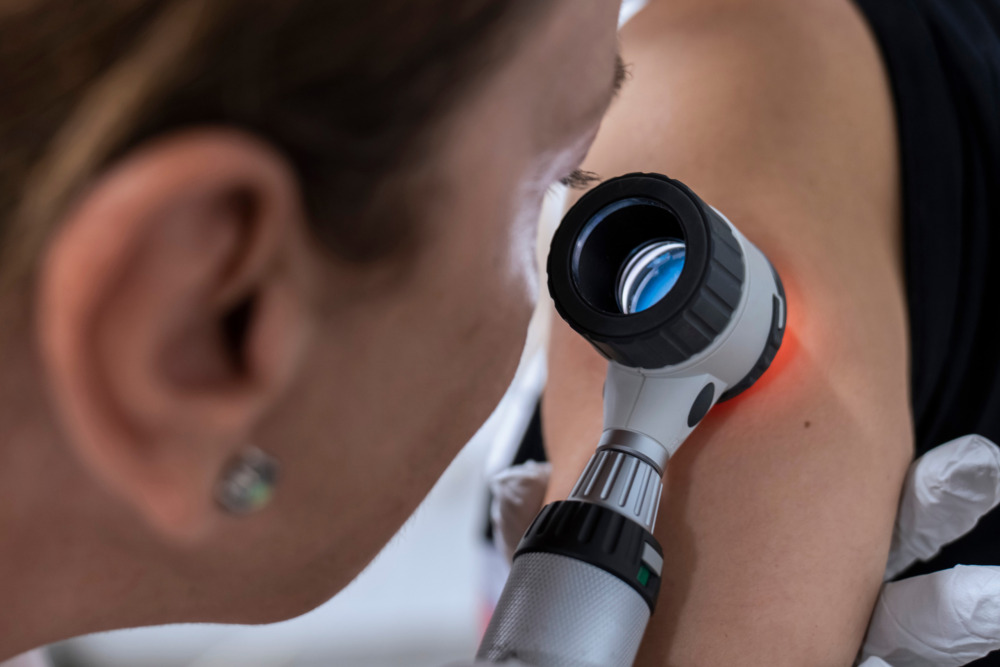
Diagnosing a cyst is usually begins with a physical examination by a specialist. In some cases, further tests such as a biopsy (a small sample of cells) may be recommended to confirm the diagnosis and rule out other conditions.
At Guy’s and St Thomas’ Specialist Care, we make it straightforward to see a specialist for assessment of skin cysts, helping you access an accurate diagnosis and appropriate treatment without unnecessary delay.
If you’re seeking a diagnosis of a cyst, complete the form on this page to book an appointment. Our experienced specialists can confirm the type of cyst you have and advise on the most suitable treatment.
Adult cyst removal
A cyst does not need to be painful or infected to be removed. Many people choose cyst removal for cosmetic reasons or to prevent future problems.
Do not attempt to remove a cyst yourself. This can increase the risk of infection, scarring and permanent skin damage.
Cyst removal options depend on the type, size and location of the cyst and may include:
- steroid injections – used to reduce inflammation and swelling, but they do not remove the cyst completely
- cyst drainage – a small incision is made to release the contents of the cyst. This can provide short‑term relief, but the cyst may return
- minor surgery (complete cyst removal) – this is the most effective treatment, as the entire cyst and its wall are removed, reducing the risk of recurrence
During minor surgical cyst removal, the area is numbed with a local anaesthetic. A small incision is made, the cyst is removed, and the skin is closed with stitches.
Cyst removal in children
Cyst removal in children follows a similar approach to adults, with additional care taken to ensure comfort and safety.
- Drainage or minor procedures may be carried out using local anaesthetic.
- Very young children may require a short general anaesthetic for surgical removal, so they remain still and comfortable during the procedure.
At Guy’s and St Thomas’ Specialist Care, your child’s wellbeing is always our priority. Our paediatric specialists provide expert, compassionate care to ensure cyst removal is as safe and stress‑free as possible.
Cyst removal aftercare
Following aftercare advice is essential to support healing and reduce the risk of infection.
- keep the wound clean and dry
- follow any instructions provided by your specialist
- stitches are usually dissolvable, so a return visit for removal is not normally required
If you have any questions about wound care after cyst removal, our team is happy to advise.
Book an appointment for cyst diagnosis or removal
Cysts are often harmless, but they can cause discomfort, concern or dissatisfaction with appearance.
At Guy’s and St Thomas’ Specialist Care, we provide expert cyst diagnosis and removal for adults and children, delivered by experienced specialists in a trusted clinical environment.
Complete the form on this page to book an appointment and discuss your cyst diagnosis or removal options with our specialist team.
Reviewed regularly to reflect clinical best practice
Last reviewed: 15 April 2025
Locations
Our plastic surgeons offer cyst removal for adults and children at the following locations:
Discover our cyst removal specialists
Our private plastic surgeons offer a range of cosmetic and medical treatments for both adults and children.