
Authors

What is private cataract surgery?
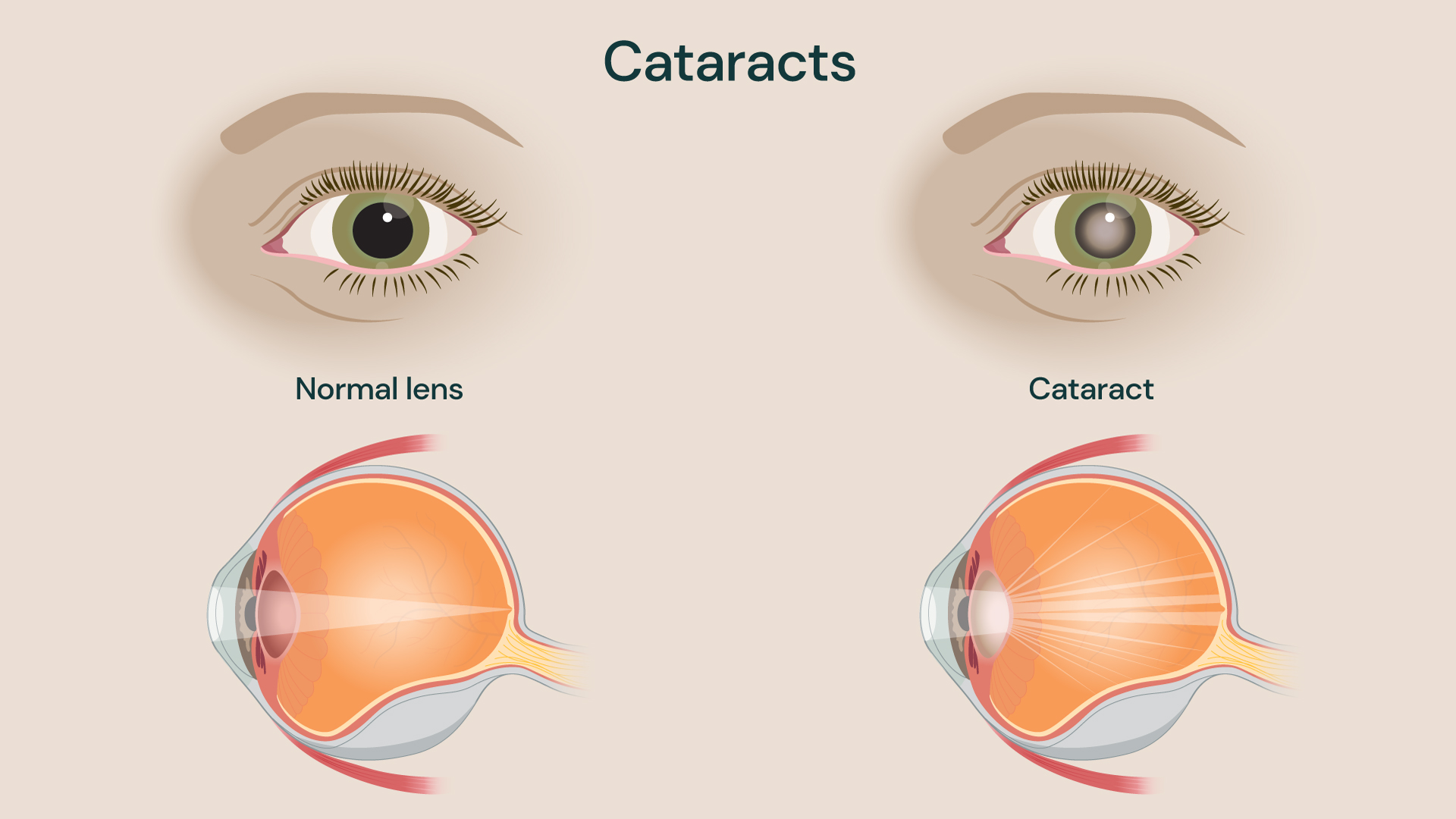
A cataract occurs in the lens of your eye when proteins clump together, causing your vision to become cloudy or misty. The development of cataracts is a normal part of the ageing process, affecting more than 70% of people aged over 85 in the UK. If left untreated, cataracts can impair your vision completely – in fact, cataracts are the leading global cause of blindness.
The surgery to remove cataracts and restore good vision is relatively straightforward and can be completed in around 20 minutes as a day case procedure, with nearly all patients leaving hospital on the same day as the operation to recover from the comfort of their own homes.
“Our ophthalmology specialists at St Thomas’ Hospital offer a range of specialist cataract treatments to restore youthful vision and allow you to see clearly again,” explains Mr Vijay Wagh, consultant ophthalmologist at St Thomas’ Hospital. “In fact, the first intraocular lens implantation operation was performed at St Thomas’ Hospital in 1950, so we have decades of experience in the procedure.”
Explore private cataract surgery with our consultants

How does cataract surgery work?
Cataract surgery involves removing the natural lens of the eye, which has become cloudy and started to impair your vision, and replacing it with a clear artificial lens. These lenses can either have no visual power, or they can be tailored to your eyesight to improve your vision, without the need for glasses or contact lenses.
Before the procedure begins, our surgeon will give you some numbing eye drops to ensure that you don’t feel any discomfort during the procedure. You will lie back on a bed in the operating theatre, and your eye will be held open with an eyelid holder for the duration of the procedure.
Our surgeon will make a small incision in your eye, before inserting a small ultrasound device to break up your cataract into small pieces, which are then suctioned out of your eye. Following this, via the same small incision, our surgeon will insert the new lens (which is usually made from acrylic) into your lens capsule.
The procedure is minimally invasive and usually doesn’t require any stitches to close the incision. If you’re having one eye operated on, you can expect to be in the operating room for around 30 minutes, but the procedure itself tends to take less than 20 minutes.
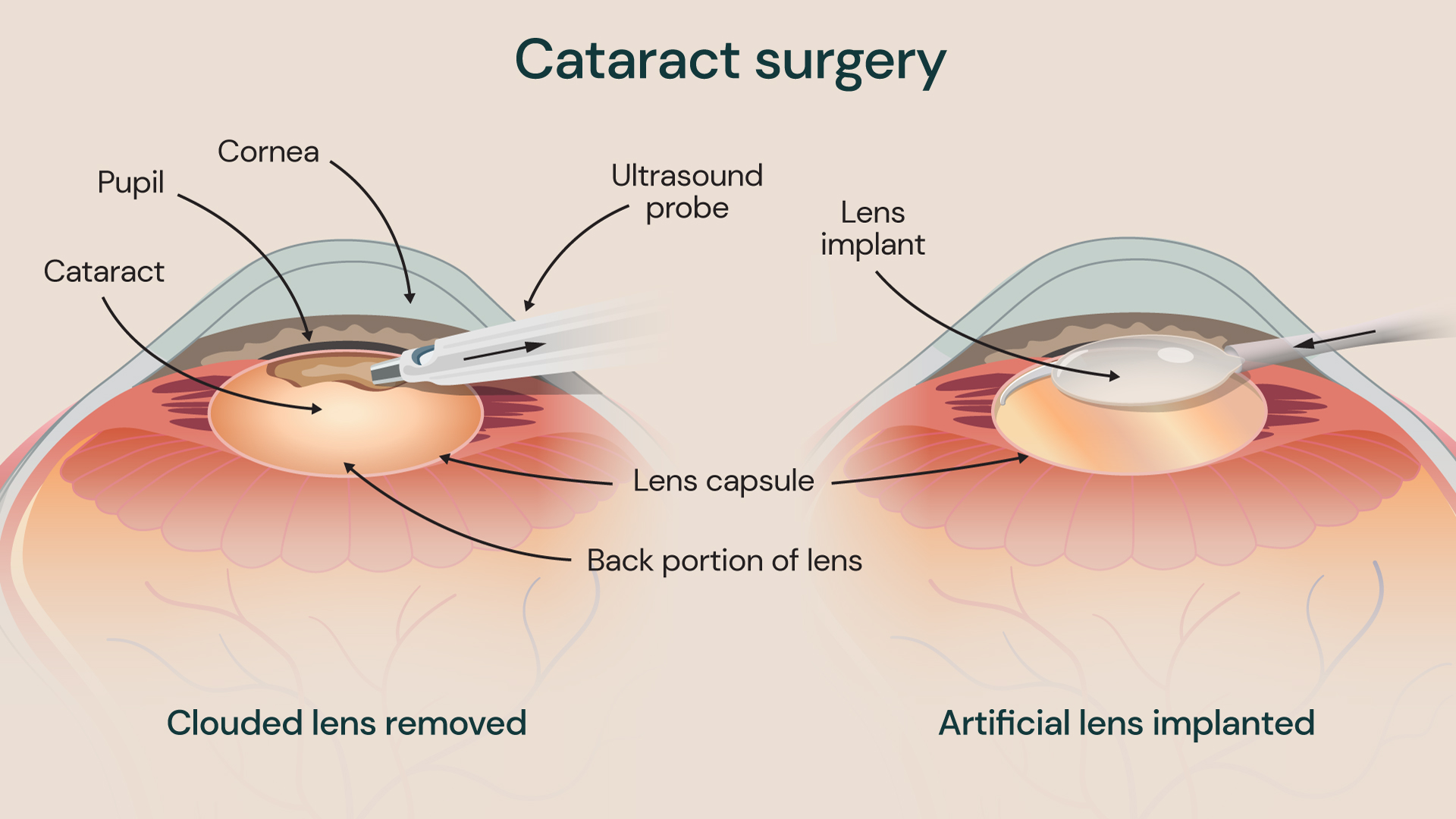
Illustration of cataract surgery, showing removal of the clouded natural lens and implantation of an artificial intraocular lens to restore vision.
What are the benefits of private cataract surgery?
Although cataract surgery is available on the NHS, waiting lists can be long and, depending on your case, you may find that your vision worsens while you wait for your procedure.
“Visiting a specialist centre, like our ophthalmology unit at St Thomas’, has numerous benefits,” explains Mr Wagh. “We’re proud to provide a high level of individualised care for patients seeking private cataract surgery with our team.”
Our private ophthalmology services are available to both self-funding patients and those with private health insurance, allowing you to be treated sooner, have a more personalised experience, and potentially a smoother recovery.
Shorter cataract surgery waiting lists
Cataract surgery waiting lists can, in some parts of the country, be as long as 35 weeks. While this is a long time to wait for any procedure, to wait over half a year while your vision potentially deteriorates even further is far from ideal.
Our ophthalmologists can offer short-notice appointments, fast and accurate diagnosis, and quick access to treatment in our state-of-the-art facilities at St Thomas’. Book a consultation with our eye care specialists to protect your vision before it deteriorates further, and get back to day-to-day activities, like driving, safely with clear vision.
Choice of cataract surgery lenses
Standard NHS cataract surgery usually involves monofocal lenses, which improve either your near vision or distance vision. Most people choose monofocal lenses to correct their distance vision, which means they tend to still use reading glasses for their near vision following the surgery. However, opting for private surgery allows you to pick a more customised lens that can improve your vision for multiple distances, as well as catering for astigmatisms and complex eye prescriptions.
Toric lenses are designed to counteract the effects of astigmatism, a condition where your eye is more rugby ball-shaped than round. Symptoms of astigmatism include blurred or distorted vision and seeing halos or streaks around lights. Choosing a toric lens as part of your private cataract surgery can improve these symptoms, while also restoring your pre-cataract vision.
Our cataract surgery specialists also offer multifocal and trifocal lens options to improve your vision at various distances with just one lens. Multifocal lenses are usually tailored to correct your near and distance vision, while trifocal lenses cover your near, distance and intermediate vision. These lenses are custom-made to correct your individual prescription, can be made as toric lenses if required, and are not available with NHS cataract surgery. If you’re hoping to eliminate the need for glasses and contact lenses following your private cataract surgery, multifocal or trifocal lenses may be your most suitable option.
Which type of cataract lens is right for you?
| Lens type | Best for | Glasses after surgery | Key benefit |
|---|---|---|---|
| Monofocal | Distance vision | Reading glasses needed | Clear distance vision with minimal visual side-effects |
| Toric | Astigmatism | Reading glasses needed | Corrects astigmatism for sharper distance vision |
| Enhanced monovision (EMV) | Balanced everyday vision | Occasional reading glasses | Reduced dependence on glasses |
| Extended depth of focus (EDOF) | Intermediate tasks | Sometimes small print | Extended range of focus for screens and hobbies |
| Multifocal/trifocal | Maximum glasses independence | Often minimal | Near, intermediate and distance vision |
|
|||||||||||
|
|||||||||||
|
|||||||||||
If your priority is sharp distance vision and you are happy using reading glasses, a monofocal lens is likely to be your best option. If you have astigmatism and want clearer distance vision, our consultant may recommend that you have a toric lens.
For reduced dependence on glasses for everyday tasks, enhanced monovision lenses are suitable. If you spend a lot of time working on computers or have hobbies at arm’s length, such as knitting, our consultant may suggest EDOF lenses. If you’re seeking a life completely free from glasses or contact lenses, multifocal or trifocal lenses are the best choice.
However, not every lens is suitable for every eye. Factors such as your retinal health, corneal shape, night driving requirements, and lifestyle should always be considered when selecting a lens. Our consultant will always take these factors into consideration before recommending a lens to you.
Bilateral private cataract surgery
“The NHS typically only operates on one eye at a time, even if you have cataracts in both eyes,” explains Mr Wagh. “Typically, you will only be offered cataract surgery once your vision deteriorates past a certain point, and it’s uncommon for both of your eyes to have deteriorated to the same level at the same time.”
With private cataract surgery, you can opt for bilateral (both eyes) cataract surgery on the same day. This shortens your overall recovery period, and allows you to benefit from improved vision in both eyes at the same time. In cases where patients have one eye operated on at a time, some people experience issues with depth perception, which is another drawback that can be avoided by having bilateral cataract surgery.
You can discuss the benefits of bilateral private cataract surgery with your consultant prior to the procedure to help make your decision.
Choose your cataract surgery consultant
One of the main benefits of private cataract surgery is that you can select your own surgeon, based on their specific areas of expertise. We are lucky enough to have a range of ophthalmology specialists based in our eye care unit at St Thomas’ Hospital, and we’re proud of the exceptional care they provide to patients seeking private cataract surgery.
Our customer care team can advise on which consultant may be best suited to perform your cataract surgery, taking a number of factors into account, including your prescription and any other eye conditions you may have.
Extended cataract surgery aftercare
Our cataract surgery specialists are on hand throughout your recovery process to monitor your vision and to offer support and advice where required.
“Most patients find the recovery after private cataract surgery smooth and notice a vision improvement in the first couple of days,” says Mr Wagh. “Full healing may take a further month or so, and you may experience a feeling of grittiness while your eye heals.”
You will see our ophthalmology specialists several times in the days and weeks following your private cataract surgery, and the team usually discharges patients from our care around 3 months after the procedure has taken place. With regular checkups and tailored appointments, you can feel confident in our cataract surgery expertise.
Reviewed regularly to reflect clinical best practice
Last reviewed: 06 March 2026