
Content verified by

More than 1 million people in the UK are currently living with heart failure — a condition that means that your heart is not able to pump blood around your body properly.
Heart failure can happen in both adults and children, but it most often affects older people. In children, it is usually caused by congenital heart disease, while in adults it is most often caused by a heart condition like coronary heart disease. Treatment depends on the underlying cause and can include medication or surgery.
Our adult and children’s heart specialists at Evelina London, Harefield and Royal Brompton hospitals are recognised as world leaders in their field. We offer advanced diagnosis and treatment for heart failure across all ages.
Experts in treating heart failure
Our world-leading consultants offer:
- short-notice appointments
- fast and accurate diagnosis with advanced investigations
- expert management of heart failure

Symptoms of heart failure in adults
Heart failure is usually a long-term condition that can get worse over time. Heart failure does not mean that your heart does not work at all, but that it just needs extra support to help it work properly.
For some people, it can take months or years for symptoms of heart failure to develop. This is known as chronic heart failure. However, for some people, the signs of heart failure develop rapidly. If this happens, it is known as acute heart failure.
The symptoms of heart failure include:
- feeling faint or light-headed
- a new, persistent cough
- feeling tired
- feeling weak
- breathlessness, when active or resting
- swelling in your feet and ankles, which could spread to your lower body.
If you notice any of these symptoms, it is important that you speak to your doctor as soon as possible.
Symptoms of heart failure in children
Heart failure in infants and children can appear different to that in adults.
In infants, symptoms can include:
- rapid or laboured breathing
- poor feeding (they can take longer to feed or become uninterested in feeding after a short time)
- poor growth and/or weight gain
- a rapid heartbeat that can be felt through the chest wall
- excessive sweating
- swelling of the face, neck, belly, lower legs or ankles
In children, symptoms can include:
- feeling breathless
- getting tired quickly
- getting up to pee more often at night
- lost appetite
- cough
- irregular heartbeat
- swelling in the feet, ankles or belly
If you notice any of these symptoms in your child, you should speak to your doctor as soon as possible.
Causes of heart failure in adults
There are lots of different reasons why you might develop heart failure. However, some are more common than others. Some of the main causes of heart failure include:
- having a heart attack: this is because a heart attack can cause long-term damage to your heart that affects how well it works
- high blood pressure (hypertension): long-term high blood pressure puts constant strain on the heart which could lead to heart failure
- cardiomyopathy: a disease that affects the heart muscle, cardiomyopathy can be inherited, develop during pregnancy, or caused by infections
- congenital heart disease: birth defects that affect the development of the heart and how it works
- coronary heart disease: this is where the arteries that supply blood to your heart become narrowed and blocked by fatty substances that build up inside them. Coronary heart disease also increases the risk of a heart attack, which could damage your heart and lead to heart failure
- arrythmia (abnormal heart rhythm problems): this includes conditions such as atrial fibrillation
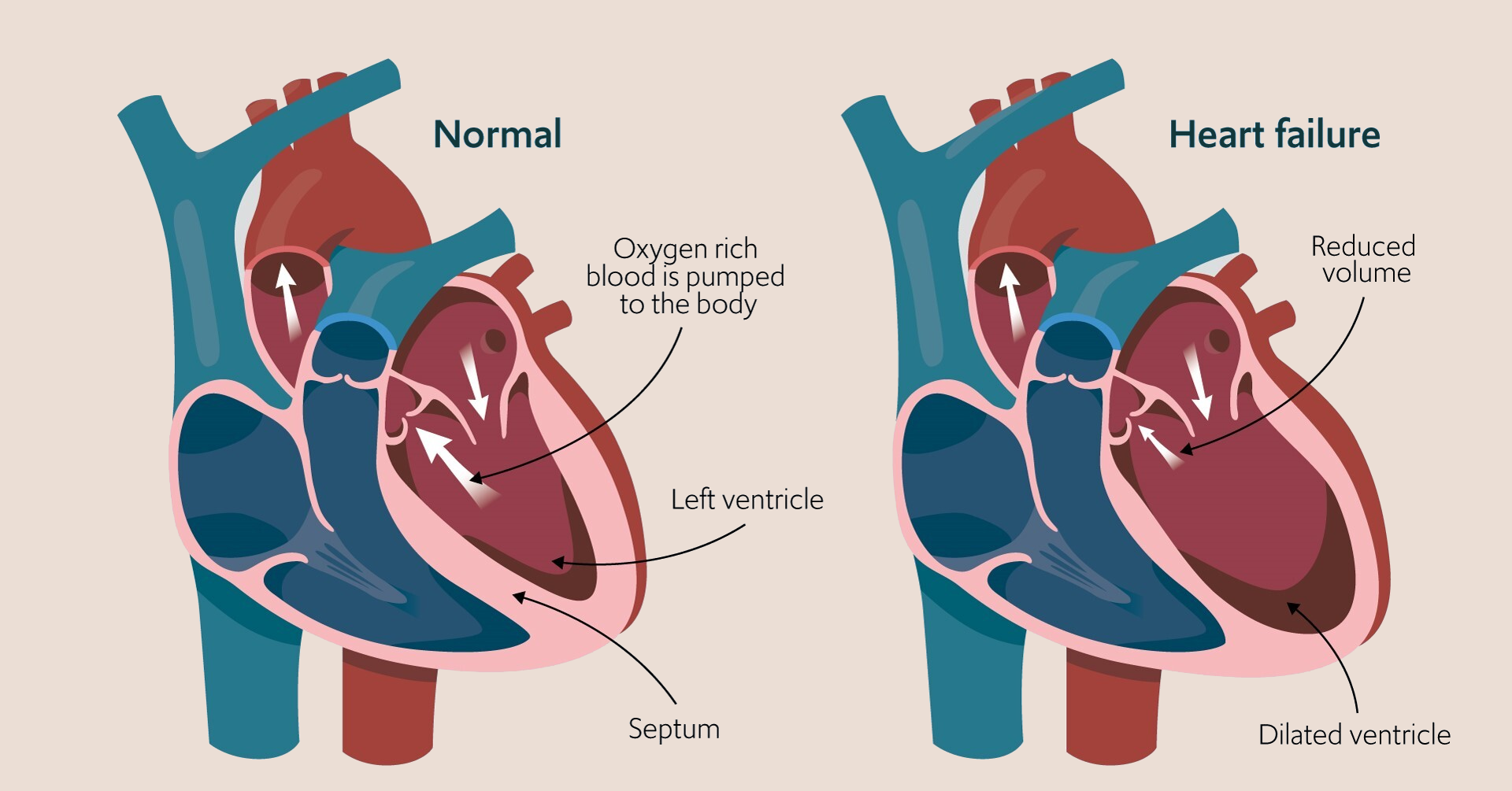
Coronary heart disease and other heart conditions can weaken the heart muscle and cause the ventricles (lower heart chambers) to enlarge (dilate), which may lead to heart failure.
Studies suggest that unhealthy lifestyle habits, such as drinking too much alcohol, smoking and becoming obese can also increase your risk of experiencing heart failure in later life.
Causes of heart failure in children
Congenital heart disease is a collective term for a group of birth defects that cause heart problems. It is one of the most common birth defects, affecting almost 1 in 100 babies born in the UK, and can lead to heart failure in children.
For example, a ventricular septal defect (also known as a ‘hole in the heart’) can cause blood to circulate between the chambers of the heart rather than around the body. This condition can resolve by itself, or may need surgical intervention.
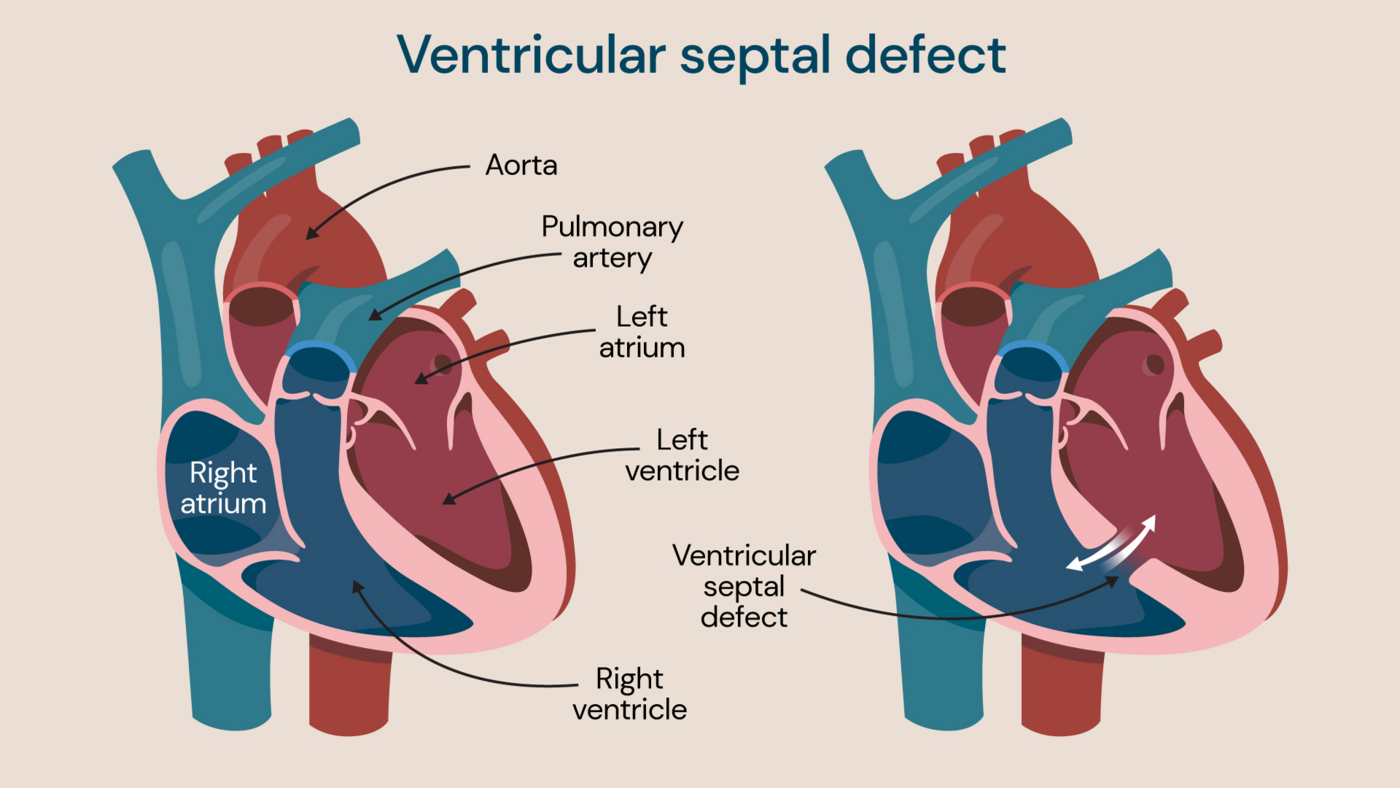
A ventricular septal defect results in blood to flow between the chambers of the heart, making it harder to pump blood around the body.
Certain bacterial, viral or fungal infections can also lead to heart failure by damaging the heart muscle or its valves. For example, infection with group A streptococcus – which causes strep throat and scarlet fever – can result in rheumatic heart disease. This condition may result in permanent damage of the heart by causing inflammation of the heart muscle (myocarditis).
The stages of heart failure
Heart failure is categorised into different stages using the New York Heart Association class.
The class is based on your symptoms:
- Class 1 – you do not have any symptoms during your everyday activities.
- Class 2 – you do not have any symptoms when you are resting, but you do when you are doing physical activity.
- Class 3 – you do not have any symptoms when you are resting, but even just a little physical activity can cause symptoms to come on.
- Class 4 – you cannot do any physical activity at all without symptoms, and you may experience some symptoms that cause you to feel uncomfortable while you are resting.
If you or your child are experiencing symptoms that may be linked to heart failure, our leading heart specialists are here to help. Contact our team today to arrange a private appointment.
How is heart failure diagnosed?
If you or your child have symptoms that could be related to heart failure, our cardiology team can arrange diagnostic tests to assess how well the heart is working. The results will help confirm whether heart failure is present and guide the next steps in care.
Some of the tests could include, but are not limited to:
- blood tests to check if there are any abnormalities that could indicate heart failure or any other medical problem
- an electrocardiogram (ECG) to assess the electrical activity in the heart
- an echocardiogram which is a type of ultrasound where sound waves produce an image of the heart so we can see its shape, size and how well it is working
- lung function tests to see how well your lungs are working
- a chest x-ray to see the size of the heart, and to check that there is not a problem with your lungs that could be causing your symptoms
- a cardiac MRI scan, which is another type of imaging test used to look at your heart
Our friendly cardiology team will explain what you can expect to happen during each test and answer any questions you may have. You can find out more about diagnostic tests for heart conditions here.
If you would like to discuss investigations for heart failure, our cardiology team is here to help. Contact us to arrange an appointment at a time that suits you.
Treatment for heart failure in adults
While there is not currently a cure for heart failure, treatments are available to help manage your symptoms and support a better quality of life. The treatment we offer will depend on the underlying cause of your heart failure, as well as its stage.
Some of the possible treatments that you could be offered include:
Lifestyle changes to treat heart failure
The following changes can prevent further damage and decrease pressure on the heart:
- eating more healthily
- quitting smoking (if you smoke)
- doing more exercise
Medication
There are many medications which can help people with heart failure.
Many of these work by reducing the load that the heart has to work against. Other types of medication that could be prescribed include beta-blockers that block the release of stress hormones in parts of the body and lower blood pressure. Your cardiology team will advise on which medication will work best for you.
Pacemaker
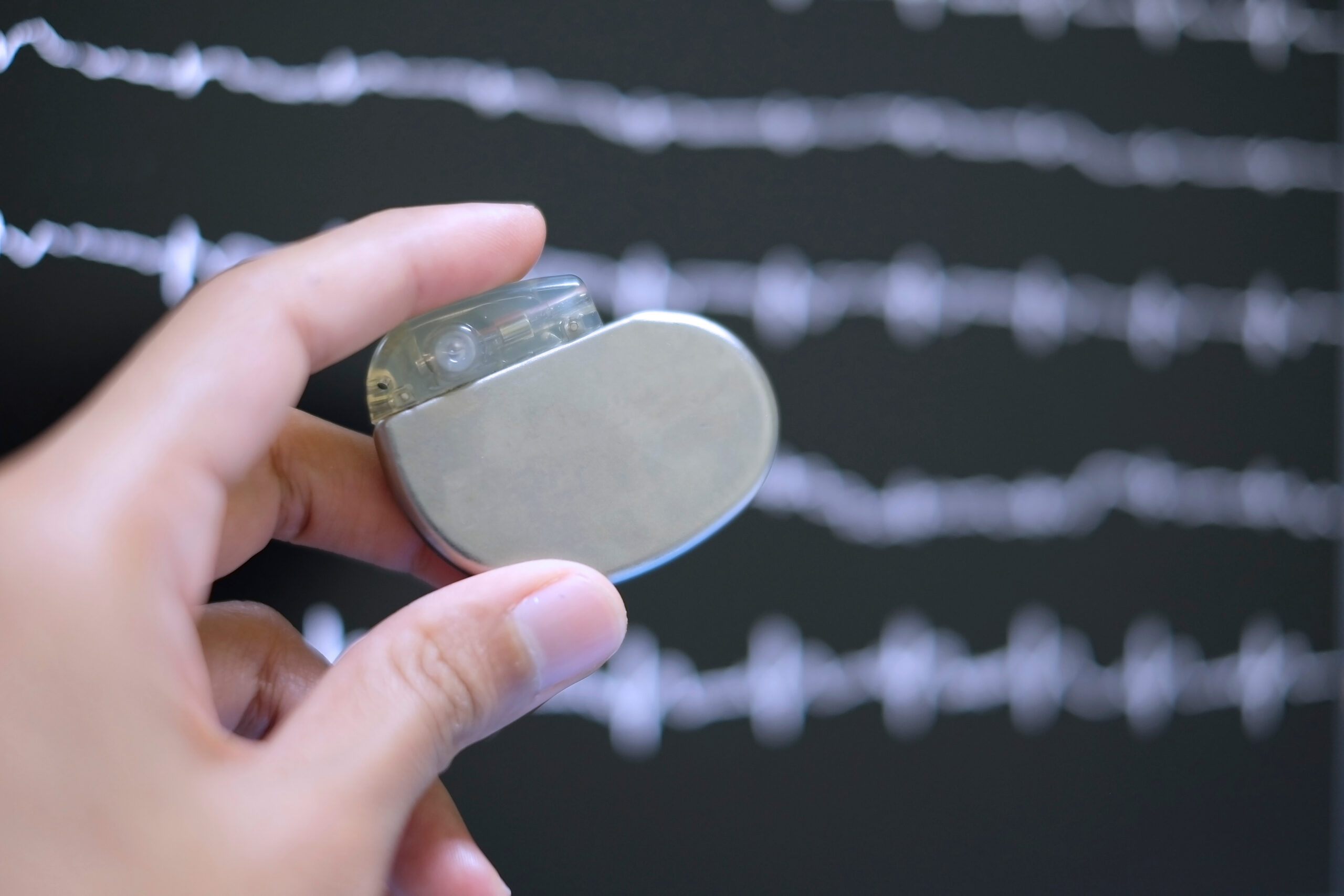
Pacemakers use low-energy electrical impulses that can control the rate of your heart and also re-synchronise the way it functions. Pacemakers are fitted under the skin, usually under local anaesthetic. Regular checks are needed to make sure that your pacemaker works properly.
Implantable cardioverter defibrillator (ICD)
An ICD is a device that monitors the rhythm of your heart and delivers mini electric shocks to reset it and restore regular rhythm if needed. Like pacemakers, ICDs are usually implanted under the skin. Some have wires that pass into the heart and others have wires that sit on top of the breastbone, under the skin.
Heart surgery
There are many different types of heart surgery used to treat heart failure. Which type you will be recommended will depend on the stage and cause of your heart failure. Procedures range from minimally invasive to open-heart surgery and even a heart transplant:
- for patients whose heart failure is caused by coronary heart disease, surgical treatment could include a coronary angioplasty (stenting) or a coronary artery bypass graft (CABG)
- for those with damaged or diseased heart valves, valve repair or replacement will be recommended
- individuals with severe heart failure may be offered a left ventricular assist device (LVAD) to boost the heart’s left ventricle and its ability to pump blood
- a heart transplant may also be offered as a last resort
Our heart specialists will be able to explain what procedure you need and what you can expect your treatment plan to look like. If you would like to speak to one of our consultants about treatment options for heart failure, contact our team to arrange an appointment.
Treatment for heart failure in children
Congenital heart disease can affect different parts of the heart, including the muscle, valves and blood vessels. As with adults, medications can help manage symptoms, but our paediatric heart specialists may also recommend a minimally invasive procedure or open-heart surgery to correct the defect. These can include:
- balloon valvuloplasty for narrowed heart valves
- surgery to close a septal defect (hole in the heart)
- valve repair or replacement surgery
We may recommend surgery shortly after birth or later in life, depending on the type of congenital heart disease.
If your child’s heart failure is due to rheumatic heart disease, our specialists will recommend the most appropriate care for your child once the infection has been treated. As rheumatic heart disease can damage the valves or heart muscle, treatment will need to be tailored accordingly.
If you’re worried about your child’s heart, our paediatric specialists are here to help. Contact our team to arrange an appointment. We will recommend the most effective treatment.
Locations
Discover our heart specialists
Our world-leading heart specialists can help manage heart failure in both adults and children. We are internationally renowned for our expertise in minimally invasive and complex heart procedures.