
Content verified by

What is coronary heart disease?
Coronary heart disease (CHD), also known as ischaemic heart disease or coronary artery disease, is when the coronary arteries that supply the heart with blood become narrowed. The condition is the most common cause of heart attack, which accounts for around 188,000 hospital visits every year in the UK. That’s one every three minutes.
There are several treatment options for coronary heart disease, including lifestyle changes, medication, coronary artery bypass graft surgery (CABG), and coronary angioplasty and stent placement.
Our dedicated facilities, Harefield Hospital, Royal Brompton Hospital, and Wimpole Street Consulting Rooms and Diagnostic Centre, have been recognised as some of the best in the world for heart care.
Experts in coronary heart disease
Our cardiology specialists provide:
- rapid access to consultations, often within 24 hours
- expert assessment to understand your individual risk
- timely treatment, tailored to your needs

How coronary heart disease affects the heart
CHD is the most common type of cardiovascular disease, causing around 66,000 deaths in the UK each year.
During CHD, the narrowing of the coronary arteries is a result of the build-up of fatty deposits within the coronary arteries – a process called ‘atherosclerosis’. The arteries become narrow and rigid and can become blocked. This restricts blood flow to the heart, and the supply of oxygen and nutrients, which has a direct effect on the heart’s function and can cause symptoms such as chest pain, shortness of breath, and even a heart attack.
When CHD is untreated, it can lead to stroke, heart attack or heart failure. It is therefore important to watch out for the following symptoms and seek advice from a health professional to ensure you get the right treatment.
If you have concerns about coronary heart disease, our specialists are here to help. Complete the form on this page to arrange an appointment.
Coronary heart disease symptoms
You might not notice CHD symptoms initially, or they could only arise during exercise. When the coronary arteries narrow further, symptoms can occur when blood flow to the heart becomes more restricted.
Symptoms of CHD may include:
- angina (chest pain) – a tightness or pressure in the chest that some people liken to a weight on their chest. The pain can be triggered by exercise and stressful or emotional events
- shortness of breath – regularly feeling like you can’t catch your breath, as your heart isn’t getting enough oxygen-rich blood
- tiredness – fatigue can happen because the heart is unable to pump blood sufficiently around the body
- heart palpitations – irregular or faster heartbeat
- nausea, dizziness and sweating – which may be associated with atherosclerosis (when arteries become narrowed)
- heart attack – if one of your coronary arteries becomes completely blocked, this will cause a heart attack
If you’re experiencing symptoms of coronary heart disease, book an appointment with one of our specialists who can help with a diagnosis.
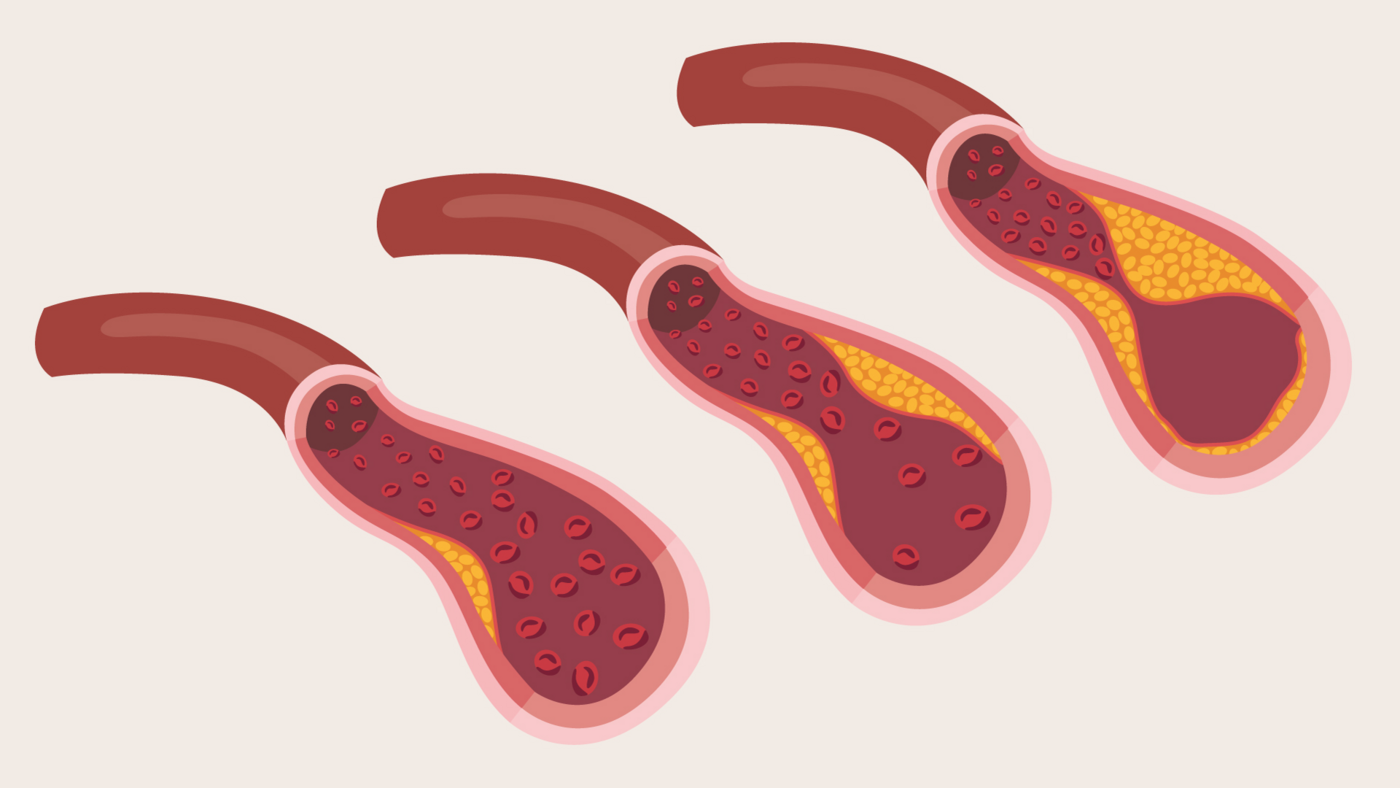
This illustration shows how coronary heart disease develops. Over time, fatty material builds up inside the heart’s arteries, making them narrower and reducing the amount of blood that can reach the heart muscle.
What causes coronary heart disease?
CHD occurs due to the accumulation of fat, cholesterol and other substances inside the heart’s arteries. This build-up is known as plaque. It causes atherosclerosis, resulting in narrowed arteries which can block blood flow. Sometimes plaque can burst, causing a blood clot.
There are several complications that CHD can lead to, including:
- angina (chest pain)
- arrhythmias (irregular heart rhythm)
- heart failure
- heart attack
Coronary heart disease risk factors
Many different risk factors relating to age, sex, family history and lifestyle can increase a person’s probability of getting CHD.
You may be more likely to get CHD if you:
- are aged 65 or older
- are male
- have a family history of heart disease
- smoke
- have high blood pressure
- have high cholesterol
- have diabetes
- are overweight or obese
- don’t exercise enough
- experience high levels of stress
- drink alcohol heavily
- don’t get enough sleep
- have chronic kidney disease
If you feel you may be at an increased risk of coronary heart disease, contact our team to book an appointment with one of our specialists.
Coronary heart disease diagnosis
If you or your GP suspects that you may be at risk of developing CHD, it is recommended that you undergo an initial risk assessment.
At the initial stage, your doctor will review your medical history, ask you questions about your symptoms and perform a physical examination, which may involve a blood pressure test and blood test to evaluate cholesterol levels in your blood.
In order to confirm a diagnosis of CHD, you may be referred to a specialist for more tests. These diagnostic tests could include:
- echocardiogram (echo) – using sound waves to create images of your heart, showing blood flow through the heart and its valves.
- electrocardiogram (ECG) – a simple test to measure the heart’s electrical activity, showing the speed of your heartbeat and signal patterns.
- stress test – using an exercise bike or treadmill, checking for symptoms that occur during exercise with echo.
- nuclear stress test – using a radioactive tracer to create images of the arteries, with echo recordings taken during a stress test.
- cardiac angiogram – guiding a catheter into an artery through to the heart’s blood vessels using X-ray, administering a special dye to show vessels that have narrowed or become blocked.
- computed tomography (CT) scan – a cross-sectional imaging test that indicates the plaque build-up which narrows and blocks arteries
If you are concerned about coronary heart disease and would like a timely diagnosis, complete the form on this page and our team will arrange an appointment with a specialist.
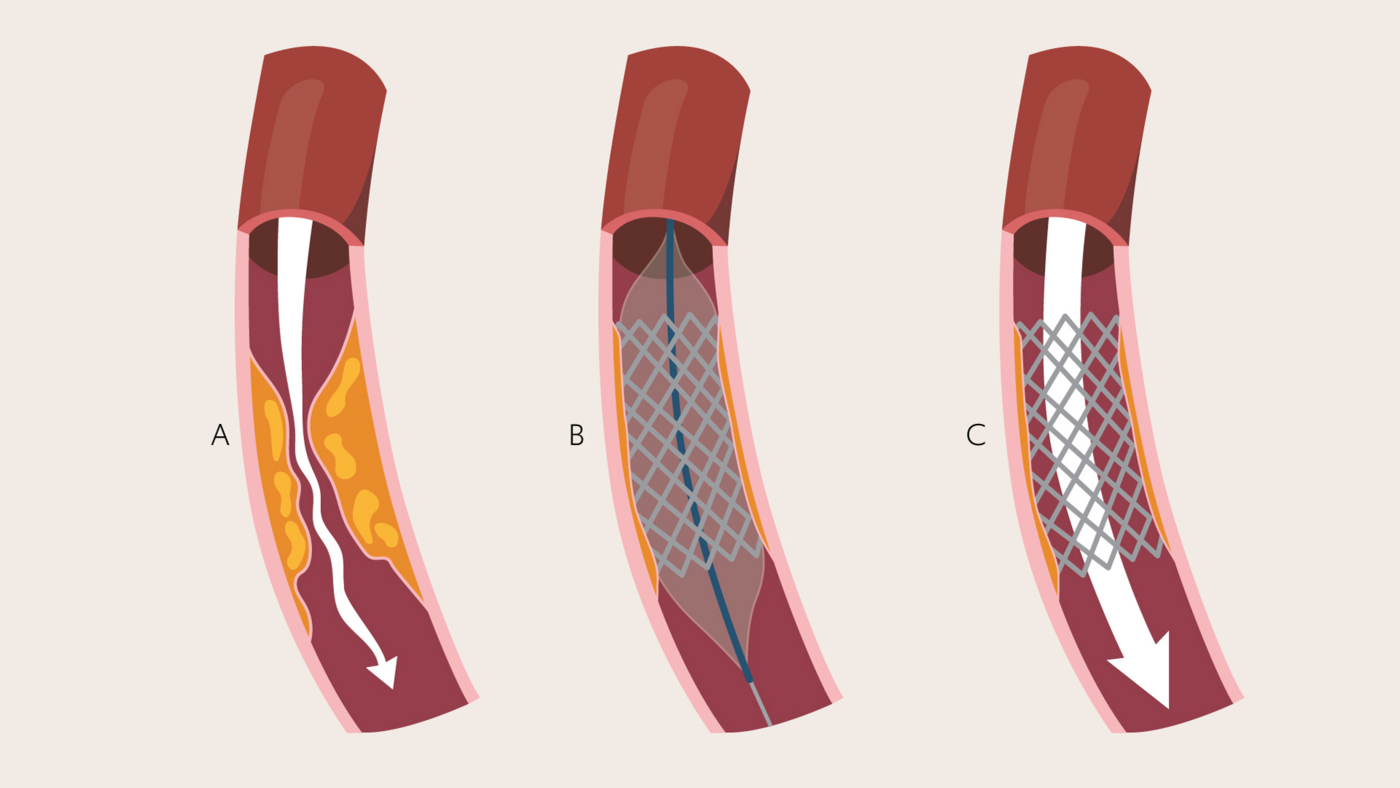
This illustration shows three stages of treating a narrowed heart artery.
A: Fatty build‑up inside the artery reduces blood flow.
B: A small mesh tube called a stent is placed inside the artery to open it.
C: The artery is held open by the stent, allowing blood to flow more freely to the heart.
Coronary heart disease treatment
Recommended CHD treatment will depend on the underlying cause and severity. With the right treatment, the symptoms of coronary heart disease can be managed and heart function improved.
Treatment for coronary heart disease typically involves a combination of lifestyle changes and medication, although a procedure such as coronary angioplasty (stenting) may sometimes be required in severe cases, or when the first two approaches have not worked.
Lifestyle changes to treat coronary heart disease
The first thing you can do is change some lifestyle factors – if you haven’t already – to help diminish the symptoms and reduce the build-up of fatty deposits in the arteries, including:
- stopping smoking
- exercising regularly
- losing weight
- sticking to a healthy diet
- cutting down on alcohol
Medication for coronary heart disease
Medications you may be prescribed for CHD include:
- cholesterol drugs
- aspirin
- beta-blockers
- calcium channel blockers
- angiotensin-converting enzyme (ACE) inhibitors
- angiotensin II receptor blockers (ARBs)
- nitroglycerin
- ranolazine
Procedures to treat coronary heart disease
Surgical or minimally invasive procedures may be recommended to treat CHD. These include:
- coronary artery bypass graft surgery (CABG) – this surgical procedure involves taking a healthy blood vessel from a part of the body such as the arm, leg or chest, and attaching it to a coronary artery. This provides a new path for blood flow in the heart around the coronary artery that is narrowed or blocked, restoring blood flow to affected areas of your heart
- coronary angioplasty and stent placement – this minimally invasive procedure uses a catheter that is guided to the affected coronary artery where a tiny balloon is inflated to widen the blocked artery, improving blood flow. A stent (wire mesh tube) can be placed in the artery to keep the artery open and reduce the risk of it narrowing again
How to prevent coronary heart disease
The lifestyle habits that can help to treat CHD are also able to help prevent it. A healthy lifestyle can help to maintain the strength of your arteries and avoid plaque build up. Consider the following tips for CHD prevention:
- stopping smoking
- exercising regularly
- maintaining a healthy weight
- sticking to a low-fat diet rich in fruits, vegetables and whole grains
- limiting your alcohol intake
- managing and reducing your stress levels
- controlling blood pressure
If you would like to discuss treatment and prevention options, complete our online enquiry form to arrange an appointment with one of our cardiology specialists.
Reviewed regularly to reflect clinical best practice
Last reviewed: 01 June 2024
Locations
Our specialists can treat coronary heart disease at the following locations:
Discover our cardiology experts
Meet our team of cardiologists specialising in coronary heart disease. Whether it’s maintaining heart health or implementing innovative interventions, our experts are here to offer personalised care tailored just for you.